
Twenty-five creators on salary
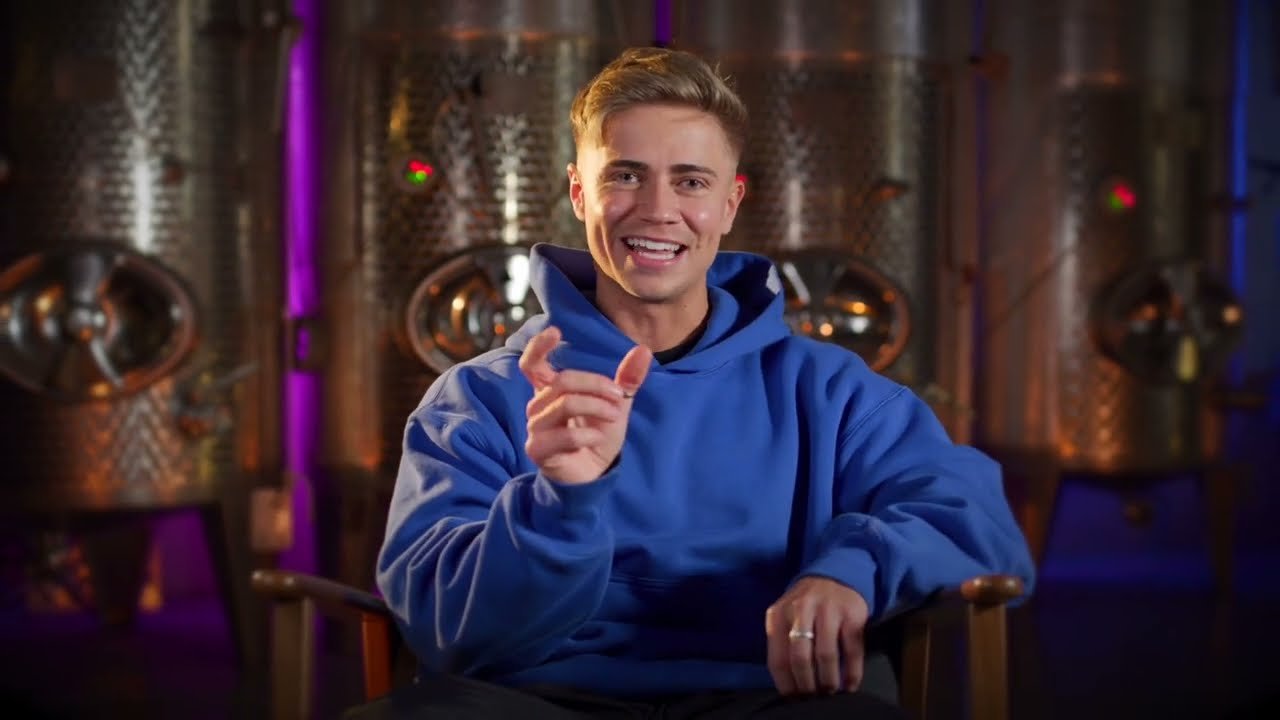
Half of publishers say they will partner with creators. One stopped talking and hired twenty-five of them. The argument nobody is having is whether a brief can carry a standard.
Social media is now the biggest news source on earth. Fifty-four per cent, ahead of television for the first time since the Reuters Institute started counting. Among eighteen to twenty-four year olds, fifty-two per cent say social, video or AI is their main route to the news.
The same research asked publishers what they would do about it. About half said they planned to partner with influencers for distribution.
The Daily Mail did not partner. It hired.
Twenty-five creators, on salary, since its creator-led channels launched late last year. Per Nathan Aspell, who runs the division: creators now appear in 90% of DMG's branded content, lift engagement across the network by 50%, and social-only briefs account for 30% of divisional revenue after one year.
It worked. It is also the most expensive answer available, and nobody builds in-house when buying works.
The gap nobody owns
My co-founder Art Raymond put the whole problem in three sentences I have not managed to improve on.
Publishers own the craft and the credibility. Creators own the attention. Nobody yet owns the connective tissue between them.
World-class reporting sits behind a paywall that younger audiences will never reach. Enormous attention sits with people who have no sourcing, no institutional access and no process. Both halves work. The join is missing.
The fight that is actually happening
While the industry argues about budgets, journalism is having a much more interesting argument about who counts.
Liz Kelly Nelson's Project C separates creator-model journalists, who apply journalistic principles, from news influencers, who mostly supply opinion. Her position is that the standard should be what fact-based information looks like, not which medium carries it. Rachel Lobdell, who runs the News Creator Corps training programme, is blunter: "we actively avoid using the word journalist."
They are being careful for a reason. A UNESCO survey of 500 news influencers across 45 countries found 63% had no rigorous fact-checking process, and 42% treated likes and shares as their main signal of credibility.
Meanwhile credentials are being handed out on vibes. The White House invited podcasters and influencers to apply at the first briefing of this term. The Pentagon's press policy collapsed in court in March.
So: can a creator be held to a journalistic standard?
Yes, and only up to a point
This is the question I get asked in every newsroom conversation, usually with an expectant face, and the honest answer is only half the one people want.
Some standards are process, and process can be enforced by a brief. Disclosure. Verified source assets that cannot be altered in substance. Attribution that records who contributed what. Corrections that actually propagate. A clearance step before anything goes out. All of that is systematisable, auditable, and considerably more reliable than trusting twenty-five individuals to remember the house style.
The rule we have landed on is simple. Creators frame verified material in their own voice. They do not rewrite it. They amplify reporting; they do not originate it.
But originating is where journalism actually lives. Source protection. Legal risk. The willingness to be sued. Editorial independence from whoever is paying. No brief delivers those, and no workflow substitutes for an institution that will stand behind a story when it gets expensive.
So a creator network does not manufacture journalists. It manufactures a verified distribution layer for journalism that already exists. That is a smaller claim than the one usually made in this category, and it is the one I can defend.
We tried this three times at YouTube
I spent seven years there and nearly thirteen at Google, and we went at this problem in three distinct waves. I was there for all of them.
First we treated it as a ranking problem. Twenty-five million dollars into news operations in 2018, on top of the three hundred million the Google News Initiative had committed that March. Authoritative sources promoted. Breaking-news shelves. Article previews in the first hours of a major story. All of it assumed the fix was surfacing the right institutions more prominently. The audience had already gone to people the ranking could not see.
Then we treated it as a funding problem. Seven million dollars in 2021 across two programmes, prompted by watching independent reporters like HugoDécrypte build real audiences alone. Grants of twenty to fifty thousand dollars to individual journalists, training run with Northwestern's Medill school, a Sustainability Lab for digital newsrooms. Fifty journalists. Forty newsrooms. Genuinely good work, and I would defend every pound of it.
Then we treated it as a talent-spotting problem. In 2023, YouTube and the Google News Initiative partnered with the Glen Nelson Center at American Public Media Group to create a Top Creator award inside its Next Challenge. The first winner was Climate Town. The thing still runs: the 2026 edition carries a $250,000 pool and the creator track is now the Pioneer Award, for an independent journalist deepening local engagement.
Three waves, nearly a decade, hundreds of millions of dollars. Every one of them treated the creator-journalist as an individual to be ranked, funded, or awarded.
Not one of them built the layer that lets a newsroom run two hundred of them at once.
Two jobs, one scorecard
Which brings me to where I think the Mail's model strains.
There are two kinds of contributor here and they are not interchangeable. The first does craft, and you judge them on accuracy and access. Audience size barely matters. The second does distribution, and you judge them on reach into a specific community. Craft barely matters.
Put both on one payroll and one scorecard and you damage both. The reporter starts getting measured on views. The creator starts getting edited like staff.
Aspell describes his team as long-serving social media managers now in front of camera, plus creators hired for on-screen ability. Those are exactly the two populations, inside one employment structure.
It holds at twenty-five. I do not think it holds at two hundred, which is where everybody wants to get to.
Independence is a rule, not a payroll
Jennifer Quigley-Jones raised the right objection. If a creator becomes a publisher's on-screen talent, does the recommendation stop working?
Aspell answered in the comments himself:
"We collaborate with our creators on their own accounts, help shape ideas that sit exclusively on their own pages, we're investing in them, WITH them."
Briefs out. Creators in their own voice, on channels they own. Investment both ways. He has described a working creator network precisely, then staffed it, because nobody handed him one.
But independence does not turn on employment. A disclosed, rights-cleared brief to an independent creator is more defensible than an undisclosed salary. The industry is adopting the second enthusiastically while worrying about the first.
Two issues ago I wrote about creator operations in the midterms, where nobody could establish who had written the brief or who had paid for it. Same failure, lower stakes here, and news is about to run the identical experiment with its credibility instead of an election.
The ones who cannot hire
American public media lost its federal funding this year. The Corporation for Public Broadcasting shut in January after roughly $1.1 billion was rescinded, money that was eight to ten per cent of the average station's budget. As many as 115 stations were judged at risk of collapse. PBS cut fifteen per cent of its staff.
Nobody in that position is putting twenty-five people on salary.
And yet public broadcasters, regional newsrooms and governing bodies hold the thing the Mail went out and bought: hundreds of local audiences who already trust them, built over decades, in the communities a national brand cannot reach from head office.
The Mail bought local credibility.
Most organisations I talk to already own it.
They cannot get it out of the building.
What comes next
We have had this conversation more than seventy times now, and it is the same every time. Running a creator network at real scale is currently impossible. Not difficult. Impossible.
The join between craft and attention is a layer somebody has to build, not a team somebody has to hire. Build it properly and the standards travel with the brief, which is the only version of citizen journalism that has ever been likely to work.
If you run a newsroom or a station with deep local trust and no way to activate it, tell me what is actually in the way. That is the conversation I want this fortnight.
More in two weeks.
Terri x
Sources
- Overview and key findings of the 2026 Digital News Report · Reuters Institute
- Social media becomes the world's leading news source · France 24
- Journalism, media and technology trends and predictions 2026 · Reuters Institute
- 'Newsfluencers' give young people a third of their news. But are they really journalists? · Straight Arrow News
- News organizations are starting to embrace creator-model journalists · Columbia Journalism Review
- The intricacies of press credentials, at the White House and beyond · CNN
- Jennifer Quigley-Jones on DMG Media's in-house creators · LinkedIn
- Inside the Daily Mail's creator-led content playbook · Digiday
- Building a better news experience on YouTube · YouTube Blog
- YouTube puts $25 million toward news initiatives · Digiday
- YouTube spending $7 million on 2 new journalism programs · Axios
- YouTube will support 50 independent journalists and 40 digital newsrooms · Nieman Lab
- Grow digital newsrooms with support and funding · News on YouTube
- YouTube and Google News Initiative seek 2023's Top Creator · Glen Nelson Center at American Public Media Group
- Glen Nelson Center announces the fifth annual Next Challenge for Media & Journalism · American Public Media
- Public broadcasting found a lifeline after defunding · Poynter
- It's been a year since Congress cut off federal funding for public media · Nieman Lab
Enjoyed this? The next one is a fortnight away.
Subscribe on LinkedIn and it lands in your feed.