Creators are already the network. Now let's give them the infrastructure.
A fortnightly from Terri Linder, founder and CEO of WeaveIn, thinking in public about the next decade of media distribution and the rise of creators as the connective layer.
I did not go to Cannes this year.
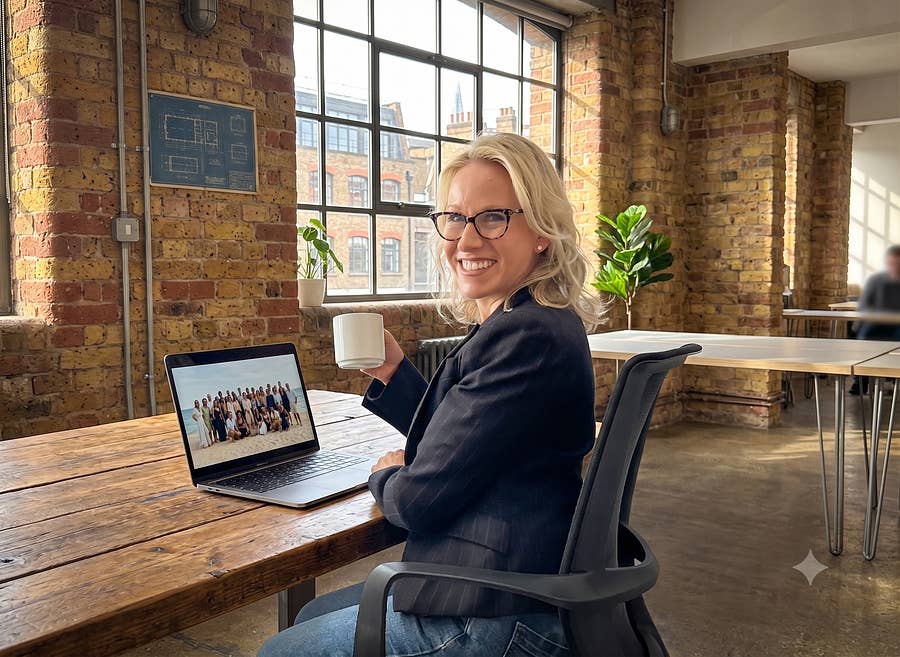
My co-founders were in Dallas. I was in a co-working space in Shoreditch by myself, closing our seed round, arguing with a database schema, and eating a suspiciously beige lunch. Everyone I know was on the Croisette. My LinkedIn feed for two weeks looked like a rosé commercial with a lanyard. I was on FaceTime with our CTO at midnight London time watching the sunrise over Cannes in someone else's story.
Reader, the FOMO was operatic.
But sitting outside it, watching the industry I have spent my career inside for a fortnight, was clarifying in a way that being there would not have been. Because from where I was — heads down, launch-week-ish, quietly obsessed with what we are actually building — one signal came through the noise louder than anything else.
Creators are already the network.
What Cannes and the World Cup just told us at once
Creators were not at Cannes 2026 as an add-on. They were the theme. Fandom was the running conversation, creators were front-and-centre in every headline recap I read, and the beach that used to be an industry party had been turned into a Creator Hub with its own podcast studios. Nishma Patel Robb — my former Google colleague — put it well in her Emperor's New Beach essay: the smart money is not buying reach anymore. It is buying trust. Which is, if you follow it all the way down, just brand by another name.
Meanwhile, over on the other side of the Atlantic, the biggest sporting event in human history is unfolding across three countries and it is telling us the same story with more expensive lighting. The FIFA World Cup 2026 has thirty TikTok creator correspondents inside the tournament right now — inside training sessions, press conferences, warm-ups, field-side. A Brazilian creator's platform has won the right to stream all 104 games in Brazil. Ninety-three per cent of fans will second-screen the matches. Unilever, one of the biggest brand advertisers in the world, has built its entire World Cup activation around creator networks in every market it plays in.
At the same time, at Queens and now at Wimbledon, the WTA has been running some of the best social content it has ever produced through TikTok collaborations that reach fandoms broadcast TV never touches. Even the BBC — a hundred-year-old public-service broadcaster with the institutional caution to match — is starting to fold creators into its marketing and fan engagement work. When the BBC starts organising around creators, the argument is over.
This is the shift I sat with in that co-working space for two weeks. Creators are not the future of media distribution. They are the present of it. And every major media business, sports rights holder, and consumer brand I know is now, publicly, acting on that reality.
Which is only half the story
Here is the bit that made me sit down and finally start writing.
Recognising that creators are the network is not a strategy. It is the acknowledgement of a shift. The next question — the one I have been building against for two years and the one this publication exists to work through in public — is: how do the media businesses and brands who now want to work with creators actually do it authentically, at scale, without turning it back into rented reach with a nicer face?
Every activation I have watched this month is a real, honest attempt at the answer. And nearly all of them are single-platform, one-off, one-to-one, or bolted on to a marketing campaign at the end. Which is what happens when the strategy is right and the infrastructure is missing. You get beautiful pilots. You don't get compounding.
Real fandom does not live on one platform. It lives across every platform, personalised to every micro-community — the tactical breakdown creators, the highlight clippers, the essay writers on Substack, the group-chat forwarders on WhatsApp. A rights holder that can activate the same moment across all of them, in every voice, at the same time, is doing something structurally different from a rights holder who can activate thirty voices on one platform. The first has infrastructure. The second has a campaign.
What we are building at WeaveIn
We exist to weave human connection into the fabric of the digital world, through creators.
That is not marketing copy for me. It is a bet on what the next ten years of media look like when the tooling finally catches up to the strategy. AI clipping now runs in single-digit seconds. Creator matching now runs as software. The economics of running a distributed network of three thousand trusted voices across every platform have quietly collapsed from impossible to routine in the eighteen months I've been building this. Nobody outside the small group of people doing it seems to have noticed yet.
WeaveIn is the infrastructure that lets a rights holder — a football federation, a Grand Slam, a broadcaster, a music label, a games publisher — do what everyone at Cannes and the World Cup was gesturing at. Ingest the content. Auto-clip it for every platform. Match it to creators with genuine affinity for the audience. Route it. Measure what worked. Compound.
The people at the Cannes Creator Hub already know the direction. The people activating the World Cup already know the direction. What I am building is the layer underneath that turns the direction into a system.
Welcome to The Weave
This is the first issue. There will be another in a fortnight, and another after that.
Some issues will be thesis — big arguments about where media is going, why the platforms lose leverage from here, and what the second-order effects look like. Some will be operator notes — real observations from inside our pilots, honestly told, including the bits that don't work. Some will be conversations — with the sports, media, and brand leaders quietly doing the work most of the industry has not yet noticed. All of them will be written by someone who is late to Cannes, early to what comes next, and would rather be shipping product than commentating on it — which is precisely why I finally started writing.
If you are running a creator strategy inside a media business, a sports organisation, or a brand right now, I want to hear what you are seeing. Reply directly. I read every one.
If you invest in media-tech and the argument here resonates, the WeaveIn dataroom is open. Say the word.
And if you were on the Croisette last week — tell me what I missed. Tell me who was in the small rooms nobody thought to film. This publication is going to be better for the people it hears from than for the arguments it makes.
See you in a fortnight.
— Terri
Sources
- The Emperor's New Beach — Nishma Patel Robb, Unmissable Substack (30 June 2026)
- Cannes Lions 2026 Grand Prix Winners — Creative Review
- Creators Take the Throne — The Fox Magazine on Cannes Lions 2026
- FIFA Creator Correspondents & World Cup Streaming — Fox Sports
- Why brands are bringing creators to the World Cup sidelines — Digiday
- Unilever and TikTok on the 2026 World Cup — Marketing Week
- HSBC Championships (Queens) 2026 — WTA
- TikTok is Turning Tennis Into a Gen-Z Spectator Sport — Inc.
- Spiideo AI Highlights Launch (May 2026)
- AWS Live AI for Fox Sports
Enjoyed this? The next one is a fortnight away.
Subscribe on LinkedIn and it lands in your feed.